Macabre Art Installation — Ghost in the Cell
What happens when the unsettling world of cinema steps beyond the screen?
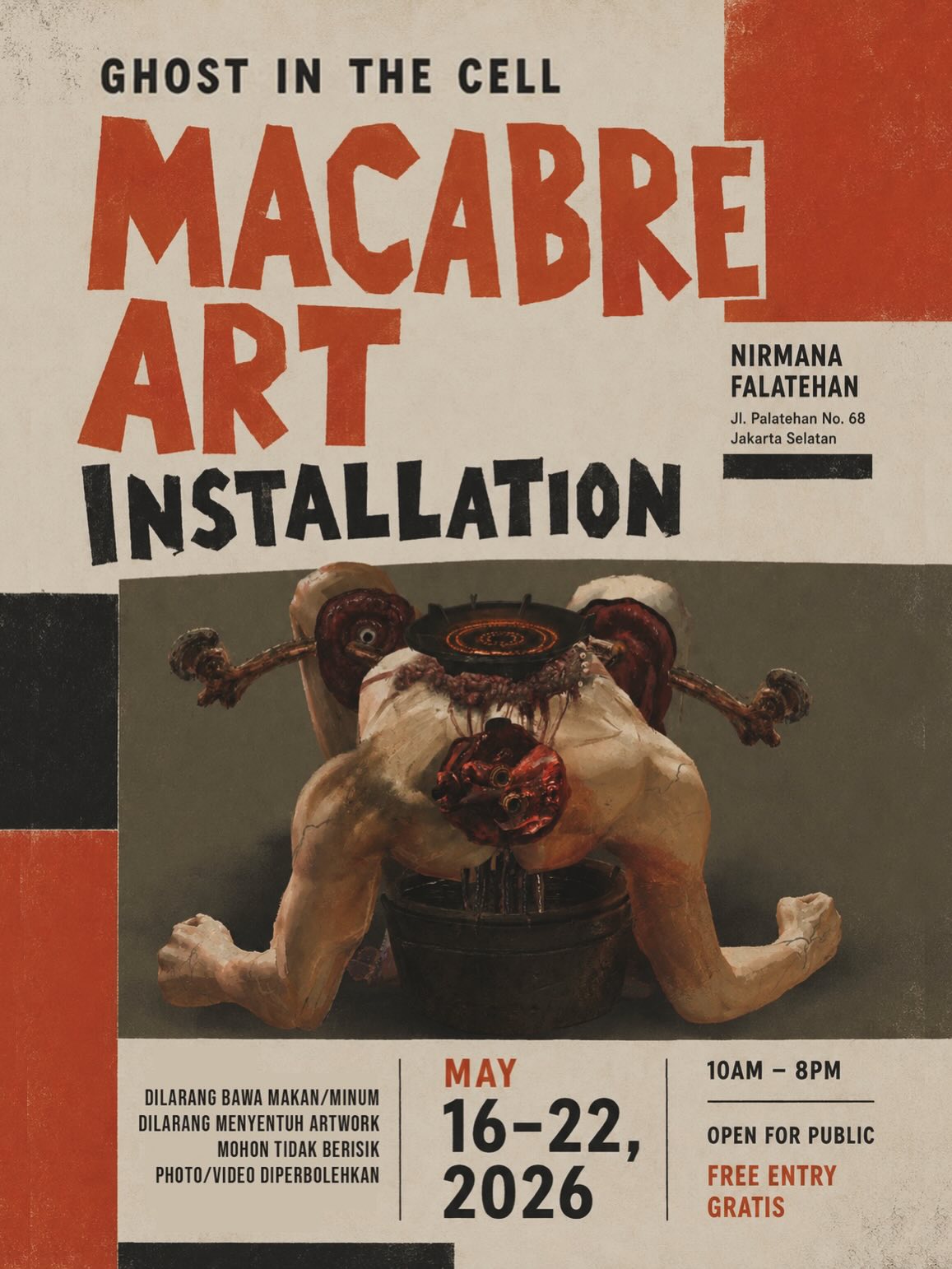
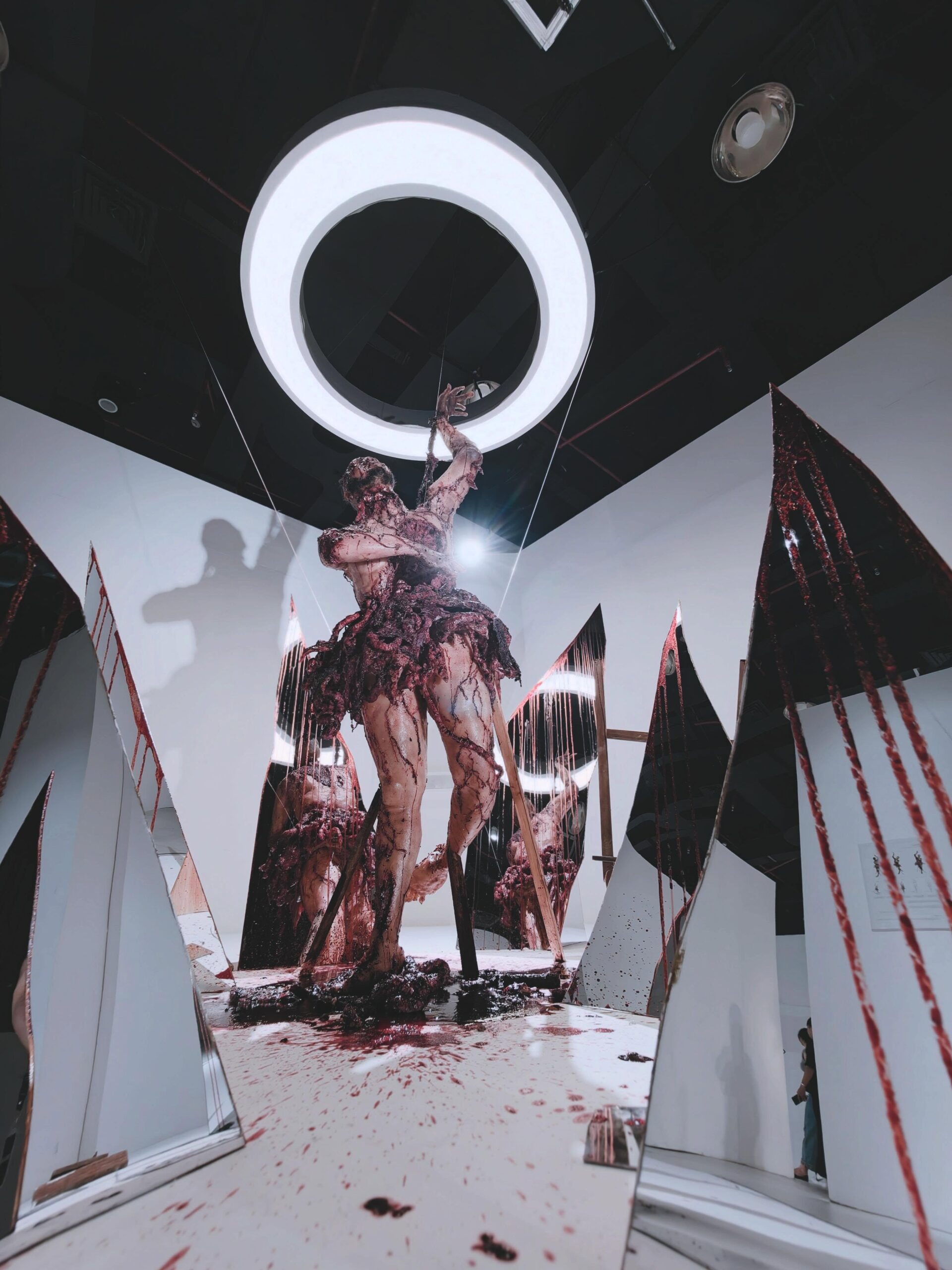
At Nirmana Falatehan, Macabre Art Installation: Ghost in the Cell transformed Joko Anwar’s dark imagination into a physical, immersive experience. Presented by Come and See Pictures, the exhibition brought six life-sized installations into the space: The Fan, Shower Head, The Stove, The Dancer, Flood Light, and Lady Justice. Each work carried its own atmosphere of tension, symbolism, and unease.
Beyond the macabre installations, the exhibition also featured interactive elements that extended the experience beyond the visual. A ringing telephone invited visitors to pick up the receiver, only to encounter dialogue unrelated to the film’s fragments of conversation and unanswered questions that introduced another layer of mystery. These unexpected interactions encouraged visitors to participate in the narrative, blurring the line between observer and subject while deepening the exhibition’s atmosphere of suspense and uncertainty.
The exhibition also included a series of sketches that revealed the creative process and philosophy behind each installation. Offering a glimpse into how the works were conceived, developed, and translated from cinematic ideas into physical forms, the sketches provided insight into the thinking behind each piece. They allowed visitors to look beyond the finished installations and engage with the ideas, questions, and visual language that shaped them.
Rather than simply displaying objects, the installation invited visitors to enter the atmosphere surrounding them. Nirmana’s raw architectural character became an essential part of the experience, allowing the works to exist not as isolated pieces, but as elements within a larger spatial narrative. Shadows, scale, materiality, and silence converged to create an environment in which the boundary between cinema and physical reality gradually began to dissolve.
For Nirmana Falathena, the exhibition offered another exploration of what a space can contain, when architecture becomes more than a backdrop, and when art is encountered not only through observation, but through presence.
Ghost in the Cell found a natural tension within Nirmana Falatehan: between the familiar and the uncanny, the constructed and the organic, the cinematic and the real. Through its life-sized installations, interactive encounters, and process sketches, the exhibition revealed how the language of film can move beyond the screen and take physical form, inviting visitors not only to observe, but to enter, question, and experience the unknown.